
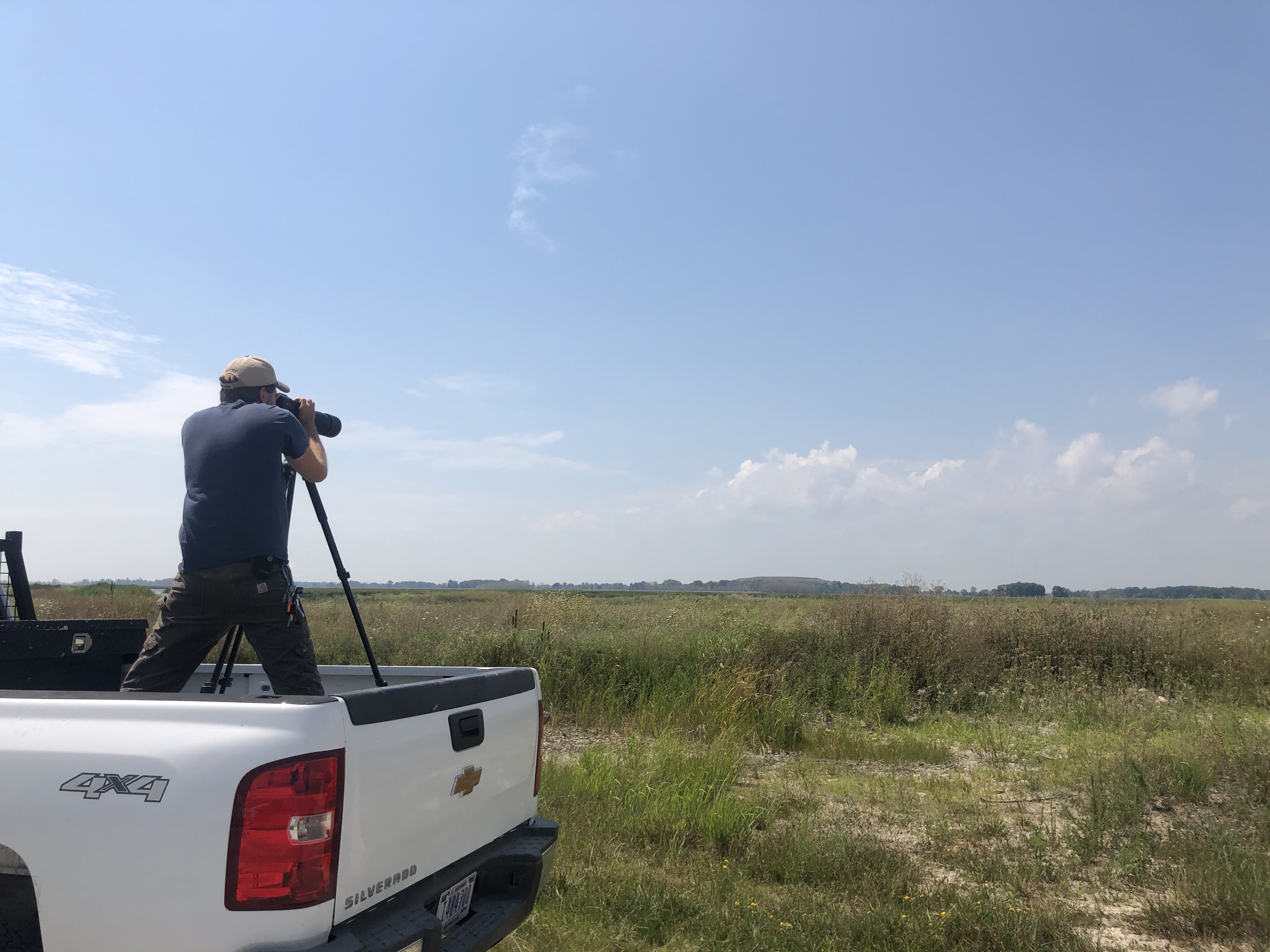
Technician surveys for invasive species on partner lands using the truck bed and a spotting scope.
Photo by DR-WLE CWMA
Early Detection and Rapid Response (EDRR)
The strike team spends late spring and summer surveying across all partner lands to search for invasive species in the freshwater marshes, lakeplain prairies, mesic (wet) forests, and surrounding habitats that exist within Wayne and Monroe Counties. They search for over 30 species of invasive plant and animal species that may be present in the area.
While surveying, they monitor size, density, and treatment history of any invasive populations they find and share the collected data with members to prioritize treatment and evaluate ecosystem health. If you’d like to learn more about how they conduct these surveys, please download our Early Detection and Rapid Response (EDRR) protocols.
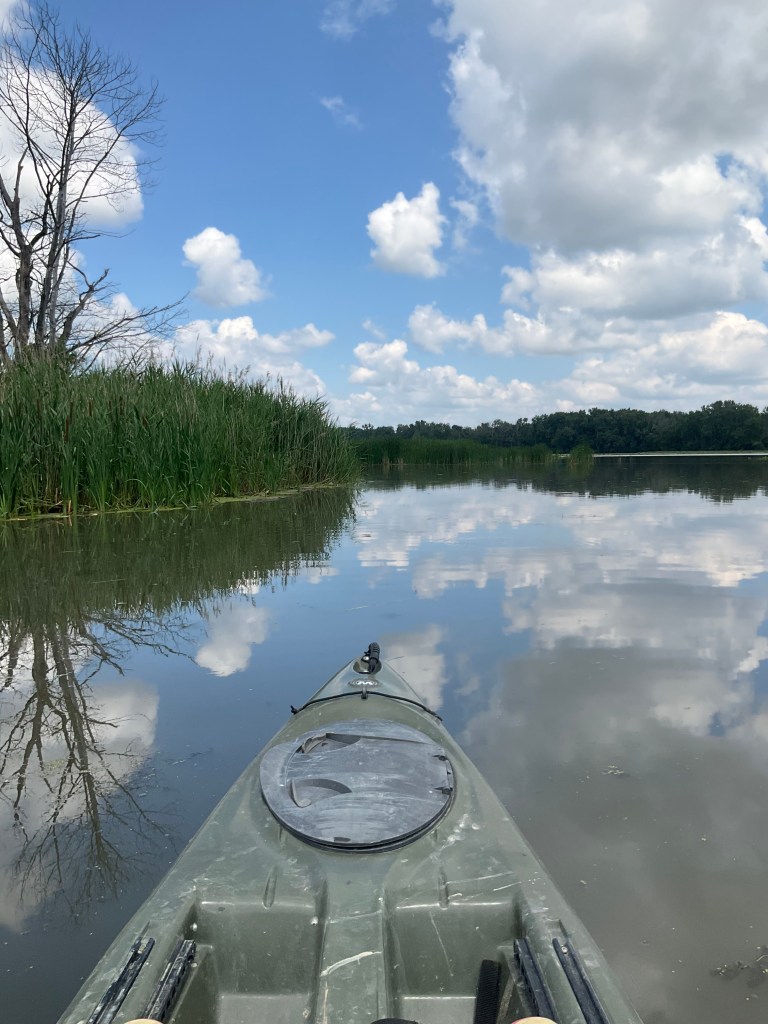
Photo by DR-WLE CWMA
Treatment
After a brief break from surveys, the team is back in the field with treatment plans, meaning they’ve evaluated the populations across ecosystems and determined which invasive plant populations will and won’t be eradicated that year. The strike team uses a combination of chemical and mechanical eradication methods, first killing the plants, and then removing the biomass.
And then the cycle repeats…
Invasive species control and eradication is a long-term project that spans multiple years, as one season of treatment is usually not sufficient. Depending on the invasive species, a three-year program can be enough to full remove a population from an area, but population size and density are closely monitored to determine treatment methods year to year.
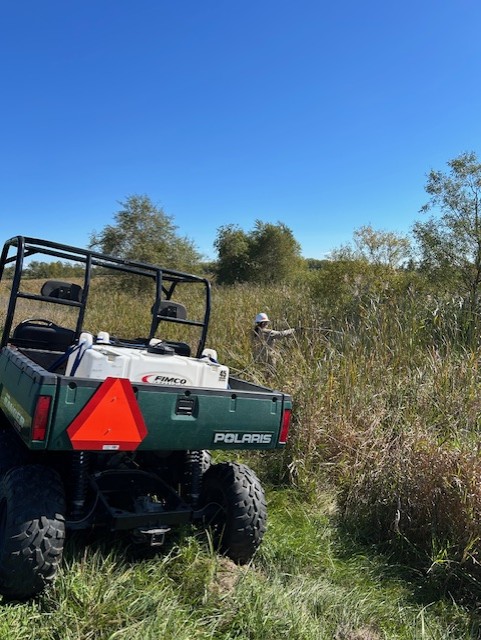
Photo by DR-WLE CWMA
Wanna learn more about our goals and priorities? Check out our 2025 -2030 Strategic Plan.
“The proper use of science is not to conquer nature but to live in it.”
Barry Commoner
 Detroit River-Western Lake Erie Cooperative Weed Management Area (DR-WLE CWMA)